Start with the order record: what went wrong, what the supplier agreed, and which deadline the order displays. Alibaba.com refund requests can involve unshipped goods, delivery problems, quality disputes or an agreed return. The decision guide below helps organise your next check; it does not decide eligibility or submit a claim.
Find the order before choosing a refund reason
Open the transaction in the Alibaba.com account used for the purchase. Save the order number, seller name, payment record, agreed specification, shipment commitment, tracking and current status. Check that you are dealing with Alibaba.com rather than a different marketplace. A supplier's business name alone is too little information to identify the applicable transaction.
Keep the original documents together. Make a small folder with a dated copy of the order and one short note describing the problem. Separate what you can demonstrate from what you suspect. For example, “the carton contains eight units; the order lists ten” is more useful than a broad accusation about the supplier. If the quantity is still uncertain, record that uncertainty before asking for a particular remedy.
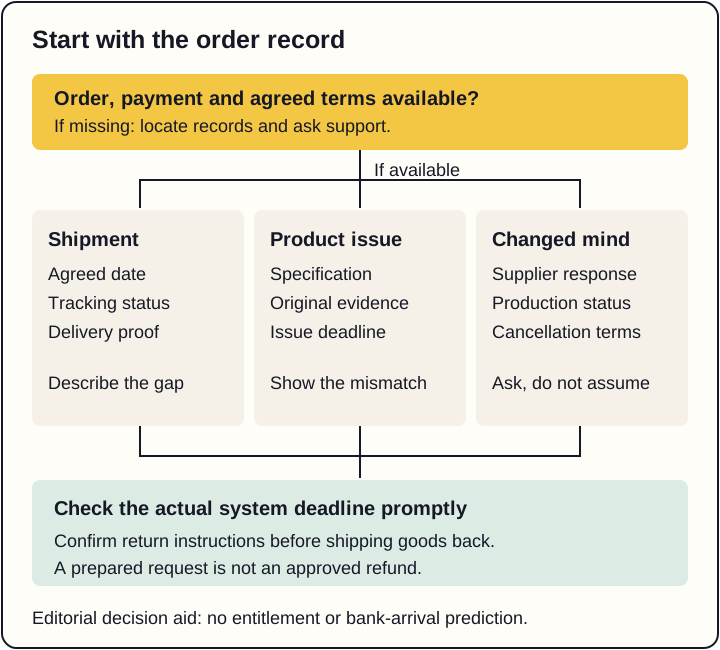
The guide asks only about transaction records and the issue you want to raise. It stores nothing and sends nothing. Its output is a preparation step, so return to the actual order to check the available application and evidence requirements.
Check the deadline now, even while collecting evidence
The official money-back overview advertises a 30-day period, extended to 60 days for Enterprise and Enterprise Pro buyers, measured from delivery. Treat that headline as an introduction to the policy rather than a date calculator for your transaction.
The Transaction Dispute Rules use confirmation of receipt, including automatic confirmation, for the general application window. Article 17 generally specifies 30 days and allows 60 for L3/L4 buyers, with special provisions taking priority. Article 57 separately requires material non-conformity to be reported within 14 days after receipt. These are different tests; a headline window does not remove a shorter issue-specific requirement.
Record the delivery date, confirmation date and deadline shown in your order separately. Ask platform support promptly when they differ or the applicable rule is unclear. Do not wait for this guide to produce a universal last-safe date: it intentionally does not calculate one. Save the question and support response alongside your evidence, and continue following any active system deadline.
If goods have not shipped, compare the agreed commitment
Write down the shipment date that both parties accepted and any later written change. Separate “I no longer want it” from “the supplier did not meet the agreed shipment terms”. Those descriptions can lead to different questions, so do not select a breach reason solely because it appears to offer a faster outcome.
Prepare a brief message with the order number, the commitment you are referring to and the remedy requested. Ask which refund option applies to that order. If the supplier says production has started, preserve the reply rather than inventing a different reason for cancellation. The decision guide routes a voluntary cancellation to a negotiation check and does not label it an automatic refund.
Avoid mixing a new purchase with the disputed order. A replacement offer, another product or a changed delivery arrangement should be documented clearly enough that you can explain what happened to the original request. Keep your own chronological note as the conversation develops.
If tracking is the problem, preserve the delivery record
Save the tracking reference and the carrier's latest event. Note whether the event says shipped, delayed, delivered or something else; do not turn a gap in tracking into proof that the goods are lost. If another person could have received the parcel, check the agreed location and the available delivery record before describing the issue.
For a delivery marked complete that you cannot locate, ask for the supporting delivery information and record any carrier investigation reference. Keep a copy of the delivery address used on the order. A wrong address, a missing delivery and a delay are separate situations, and a clear initial description helps the supplier and platform understand which one you are reporting.
This is an evidence preparation route. It cannot determine responsibility for customs, transport or an address error. Put any unresolved question into the support message instead of using the tool output as a finding of fault.
If the goods are wrong or damaged, show the mismatch
Build a small evidence set that connects the received item to the order. Include the label identifying the parcel or product, an overall view and a close view of the specific issue. Where practical, describe the specification as written and the observed difference in adjacent sentences. Keep original photos and recordings; do not edit them in a way that hides context.
A hypothetical example: an order specifies ten blue components, while a counted delivery contains eight blue components. Record the ordered quantity, received quantity and the evidence for the count. This is a clearer starting point than claiming that the entire order is worthless. A colour, dimension or performance dispute needs its own relevant comparison rather than this quantity example copied into a complaint.
Ask what further evidence is required for the issue and respond within the actual case deadline. The tool does not assess quality, estimate a refund percentage or replace an inspection. Where the problem is not visible in a photograph, ask what assessment would be appropriate before paying for one.
Check return instructions before sending goods away
The official overview describes Easy Return for supporting orders and lists the UK among eligible destinations. It also states an order-value condition below USD 3,000 and directs buyers to full eligibility terms. That does not establish that every UK order has a free local return.
Check the service actually attached to your product and order. Save the authorised return destination, carrier arrangement, packaging requirements and tracking instructions. Ask who is arranging collection and what evidence records the handover. Do not assume that the supplier's address on an invoice is the correct place to send a disputed item.
The Trade Assurance Services Rules make the outcome dependent on the transaction and evidence. They require cooperation with a required return and describe conditions and exclusions. Their normal refund-remittance provision also allows additional review; receiving-bank processing affects receipt. Avoid promising a fixed bank arrival date to anyone relying on the money.
Keep a usable request and outcome record
Use five short lines for your request: order number; agreed term; observed problem; evidence attached; remedy requested. Add the active deadline and the question that still needs an answer. Keep personal payment details out of public reviews or screenshots you share outside the case.
After a response, record whether it is an offer, an agreed settlement, an instruction to return, an approved refund or money actually received. Those stages are different. Compare the actual outcome with the request and keep the supporting reference if a step remains incomplete. This record is an editorial organisation aid, not legal advice or a promise that a dispute will succeed.